

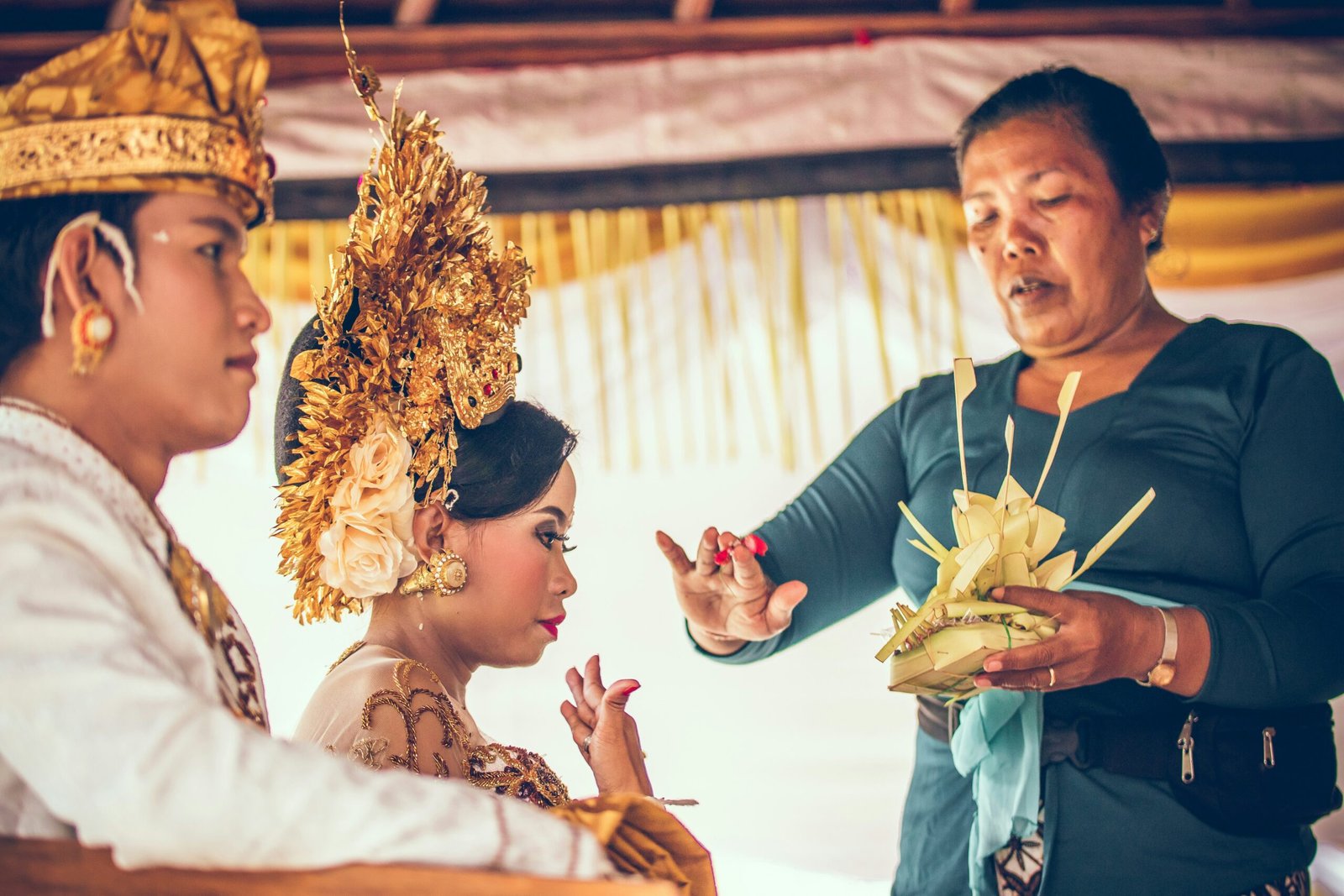
Bali is not just a destination for sun-seekers and surfers; it is a land where spirituality flows through every stone and flower. For many couples, the dream of a tropical wedding brings them here. Yet beyond the modern beachfront resorts lies the true heart of the island’s culture: the Traditional Balinese Wedding.
A Balinese wedding, or Pawiwahan, is a profound spiritual union, not just between two people, but also between families, ancestors, and the divine. In this guide, we will delve into the intricate rituals, the vibrant aesthetics, and the timeless philosophy that make a Balinese wedding one of the most extraordinary ceremonies in the world.
The Philosophy of Pawiwahan
In Balinese Hinduism, marriage is one of the Manusa Yadnya (human rituals) aimed at purifying the human soul. It marks the transition from the “unproductive” stage of life to the householder stage (Grhastha), where the couple assumes the responsibility of continuing the family lineage and maintaining the spiritual balance of their village.
If you are planning your holiday travel to witness or participate in such a ceremony, it is important to understand that every gesture carries significance. From the offerings (Banten) to the precise timing of rituals, nothing is left to chance.
Pre-Wedding Rituals: Setting the Foundation
A traditional wedding doesn’t start at the altar; it begins weeks or even months prior.
1. Ngekeb (Preparation)
This ritual is designed to prepare the bride for her new life, symbolizing her transition from her family of origin to her future married life. Traditionally, she stays in her room and is not allowed to see the groom for a certain period, emphasizing reflection and spiritual readiness.
During this time, the bride undergoes a ritual bath with fragrant flowers and a scrub called Lulur, which represents cleansing and the shedding of her old life. This ceremonial preparation ensures she enters her marriage renewed, both physically and spiritually, ready for her new role in the family.
2. Mepadik (The Formal Proposal)
The groom’s family visits the bride’s house to formally ask for her hand in marriage, a ceremony that reflects respect and tradition. Moreover, this meeting is part of a careful negotiation between families to ensure mutual understanding.
In addition, in Balinese culture, family lineage and social harmony are highly important. This ritual guarantees that both families are aligned and supportive before the marriage proceeds.
The Main Wedding Ceremony
On the wedding day, every sense comes alive. The sweet aroma of incense and frangipani fills the air, while the steady beat of the Gamelan orchestra creates a lively, festive atmosphere.
Medagang-Dagangan (Market Simulation)
This is one of the most unique and playful parts of a Balinese wedding. During this ritual, the couple performs a mock transaction in which the bride “sells” household goods and the groom “buys” them.
Moreover, this ritual symbolizes the couple’s commitment to working together to create a prosperous household. In addition, it emphasizes the importance of collaboration and wise financial management in their married life.
Makala-kalaan (Purification)
The couple sits before a priest (Pemangku) to undergo a purification ritual, preparing themselves spiritually for marriage. As part of the ceremony, they tear a thread, symbolizing the breaking away from past negative influences.
This ritual marks the moment they are spiritually united in the eyes of the gods. It signifies a fresh start and the blessing of divine forces on their new life together.
Metajen (Cockfight Ritual)
While it may seem controversial to outsiders, a symbolic cockfight is traditionally included in the ceremony. This ritual is meant to appease the lower spirits, known as Bhuta Kala.
By honoring these spirits, the ritual helps prevent negative energies from affecting the couple’s future happiness. It is a symbolic practice deeply rooted in Balinese spiritual beliefs and cultural heritage.
Traditional Wedding Attire: The Payas Agung
No guide is complete without mentioning the breathtaking attire. Balinese wedding garments, known as Payas Agung, are the epitome of luxury and symbolism.
| Element | Description | Symbolism |
| Gelung/Crown | A high, golden headpiece made of real gold or gold-plated brass. | Represents the sacred mountain and high status. |
| Songket Fabric | Hand-woven silk with gold or silver threads. | Wealth and cultural heritage. |
| Keris | A traditional wavy-edged dagger tucked into the groom’s belt. | Power, protection, and masculinity. |
| Cendana (Sandalwood) | Marks on the forehead. | Protection of the “third eye” and spiritual focus. |
Planning Your Visit for a Wedding
If you wish to experience the magic of Bali, consulting a professional Indonesia travel agency is the best way to ensure your visit coincides with the Balinese calendar. Balinese ceremonies follow the Pawukon and Saka calendars, which means dates shift every year.
Choosing the best time to visit Indonesia is crucial for enjoying these celebrations. Generally, the dry season (April to October) offers ideal weather for outdoor ceremonies, though some believe that a Balinese wedding during the rainy season brings extra blessings.
Cultural Etiquette for Guests
If you are invited to a traditional Balinese wedding, remember these key points:
- Dress Code: Wear a sarong and a waist sash (Selendang). For men, a collared shirt or a traditional Udeng (headtie) is appreciated.
- Don’t Stand Higher Than the Priest: In Balinese culture, the head is sacred. Ensure you are not standing on a wall or chair higher than the officiating priest.
- Menstruation: Women who are menstruating are traditionally asked to refrain from entering the inner temple area (Jeroan) where the most sacred parts of the ceremony take place.
Summary of the Wedding Process
- Finding a Good Day: Consultation with a priest to find an auspicious date.
- Ritual Purification: Cleaning the soul of both the bride and groom.
- Legal and Spiritual Union: Signing documents and receiving the priest’s blessing.
- The Feast: Sharing traditional food like Lawar and Babi Guling with the community.
FAQ
1. Is a traditional Balinese wedding legally recognized for foreigners?
A spiritual blessing is easy to arrange, but a legal Hindu wedding (Pawiwahan) requires both partners to declare Hinduism as their religion and provide specific documentation. Most foreigners opt for a “Blessing Ceremony” followed by legal registration in their home country.
2. What food is served at a traditional wedding?
You will likely be served Babi Guling (suckling pig), Lawar (a mix of vegetables and minced meat with spices), and various traditional Balinese cakes. It is a true feast of local flavors!