Taman Ayun Temple is one of Bali’s most elegant and historically significant temples, offering a peaceful retreat into the island’s royal past, sacred traditions, and harmonious relationship with nature. Located in Mengwi Village, Badung Regency, this temple stands as a remarkable example of Balinese architecture, spirituality, and landscape design, often included in curated cultural itineraries by an experienced Indonesia travel agency seeking to showcase Bali beyond its beaches.
The name Taman Ayun translates to “beautiful garden”, a fitting description for a temple complex surrounded by calm waterways, manicured lawns, and lotus-filled ponds. Unlike Bali’s cliffside or mountain temples, Taman Ayun presents a refined royal atmosphere, reflecting its origins as a state temple of the Mengwi Kingdom.
A Brief History: The Royal Heart of the Kingdom
Built in 1634 by the King of Mengwi, I Gusti Agung Putu, Taman Ayun Temple served as the main place of worship for the Mengwi Kingdom. It was designed to be a “Mother Temple” for the local people, so they wouldn’t have to travel long distances to major temples like Besakih.
In 2012, UNESCO recognized Taman Ayun as part of the “Cultural Landscape of Bali Province.” It is a vital part of the Subak system (Bali’s traditional irrigation system), which harmonizes the relationship between humans, nature, and the spiritual realm.
What to See at Taman Ayun Temple
As you walk through the manicured gardens, you will witness the pinnacle of Balinese Hindu architecture:
Water Garden & Moat
The temple complex is encircled by broad moats and lotus-filled fish ponds, creating the illusion that the shrine gently floats above the water. This surrounding landscape enhances the temple’s serene atmosphere and highlights its harmonious integration with nature.
Beyond its visual beauty, the water holds deep symbolic meaning in Hindu belief. It represents purification and the cosmic ocean (Segara), reinforcing Taman Ayun Temple’s spiritual significance and its role as a sacred space.
Tri Mandala Structure
Like many traditional Balinese temples, Taman Ayun follows the Tri Mandala concept, a hierarchical spatial layout:
- Jaba Pisan (Outer Courtyard): An open area once used for preparations and community gatherings.
- Jaba Tengah (Middle Courtyard): A transitional space featuring pavilions (bale) for ceremonies and offerings.
- Utama Mandala (Inner Sanctuary): The most sacred zone, reserved for prayer and spiritual rituals.
Each courtyard marks a gradual transition from the worldly realm to the divine.
Multi-Tiered Meru Shrines
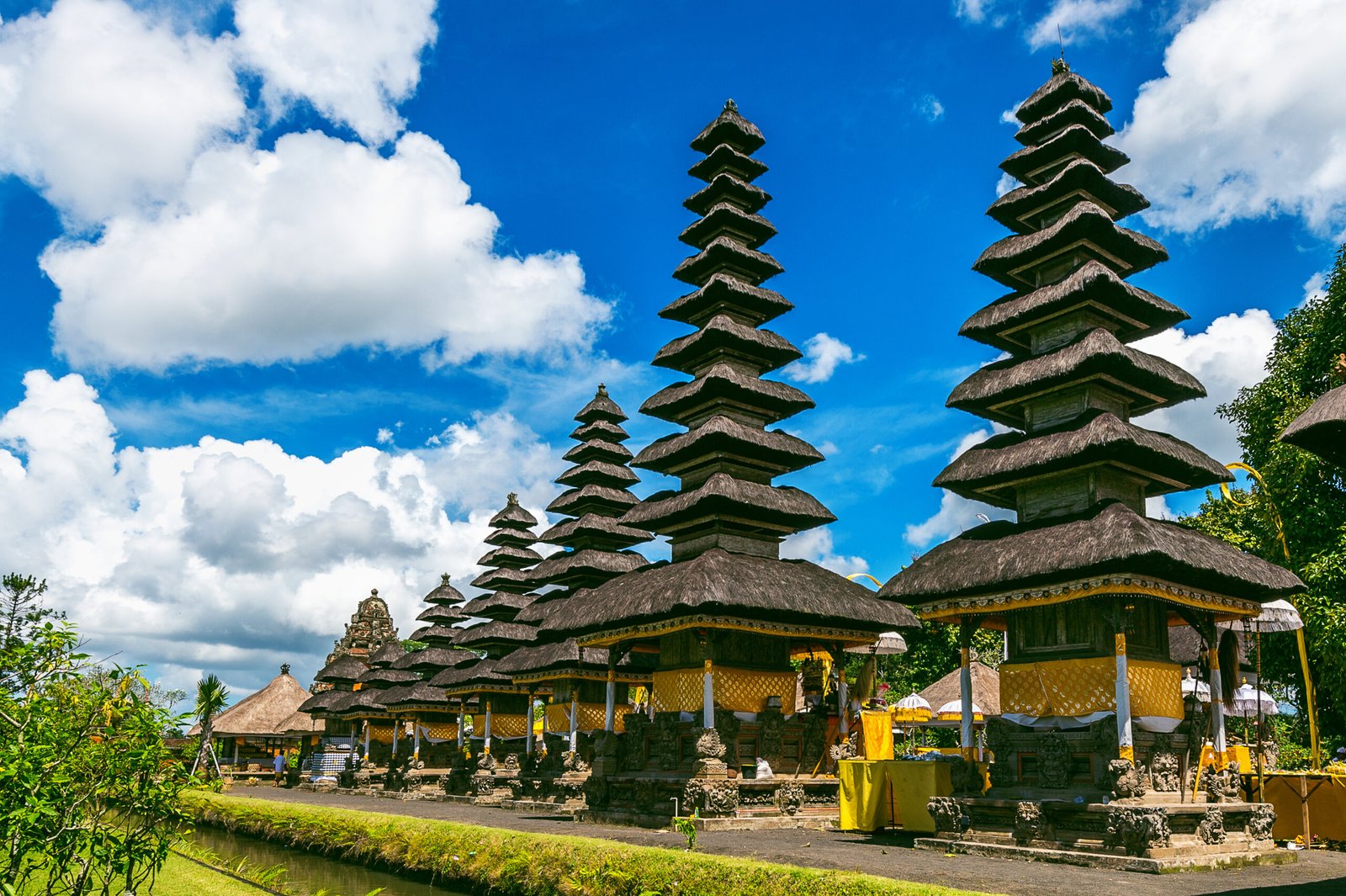
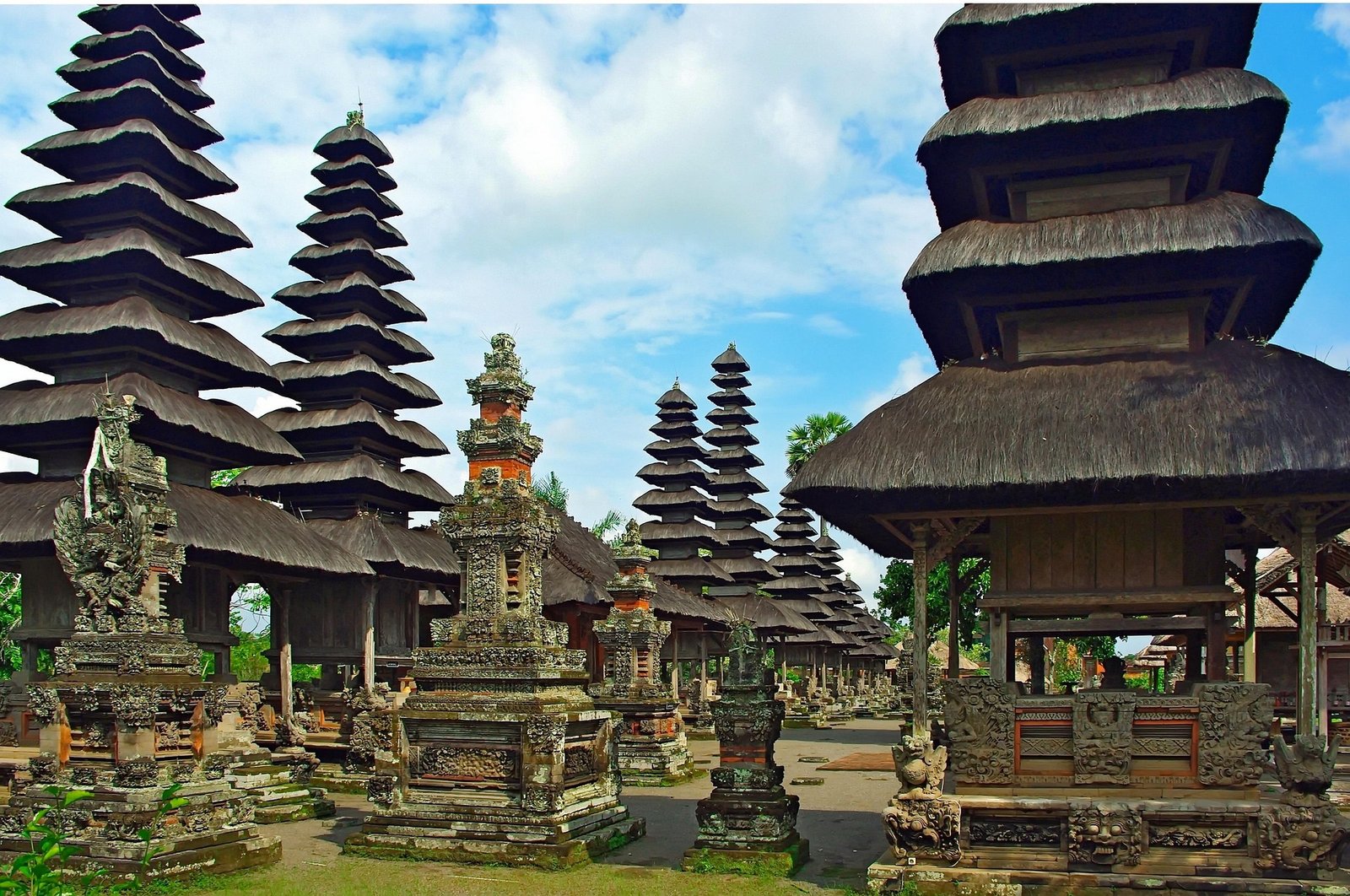
Inside the inner sanctuary stand elegant Meru Towers with layered thatched roofs, some rising up to eleven tiers. These shrines are dedicated to deities and ancestral spirits, with their vertical design symbolizing Mount Meru, the center of the universe in Hindu cosmology.
Well-maintained pathways, arched bridges, intricate stone carvings, and manicured tropical gardens allow visitors to explore the complex comfortably while immersing themselves in its calm and ceremonial atmosphere.
Cultural Significance
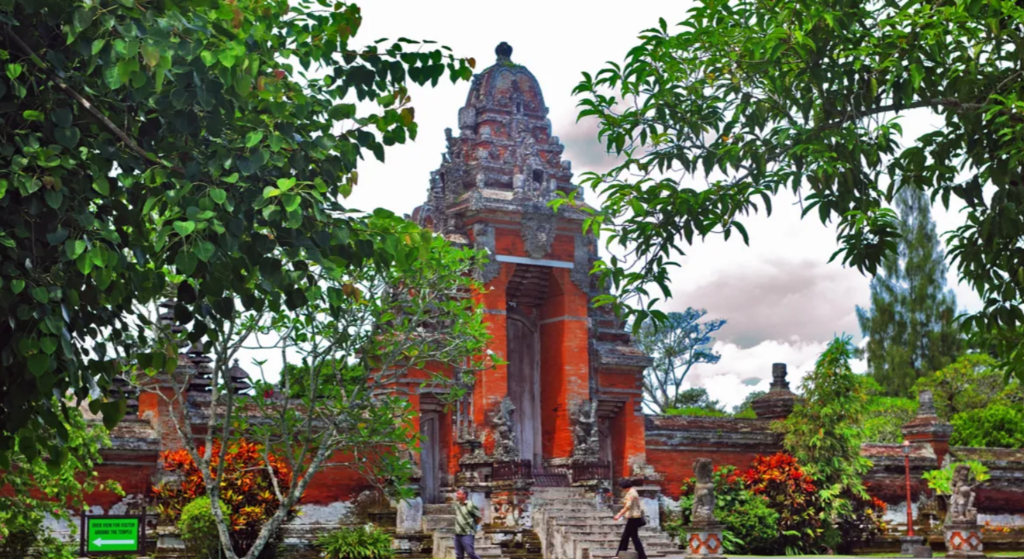
Taman Ayun Temple is not merely a preserved historical monument; it remains an active place of worship for the local Balinese Hindu community, particularly those connected to the former Mengwi royal lineage. Religious life at the temple follows the Balinese Pawukon calendar, a unique 210-day cycle that governs ceremonial life across the island.
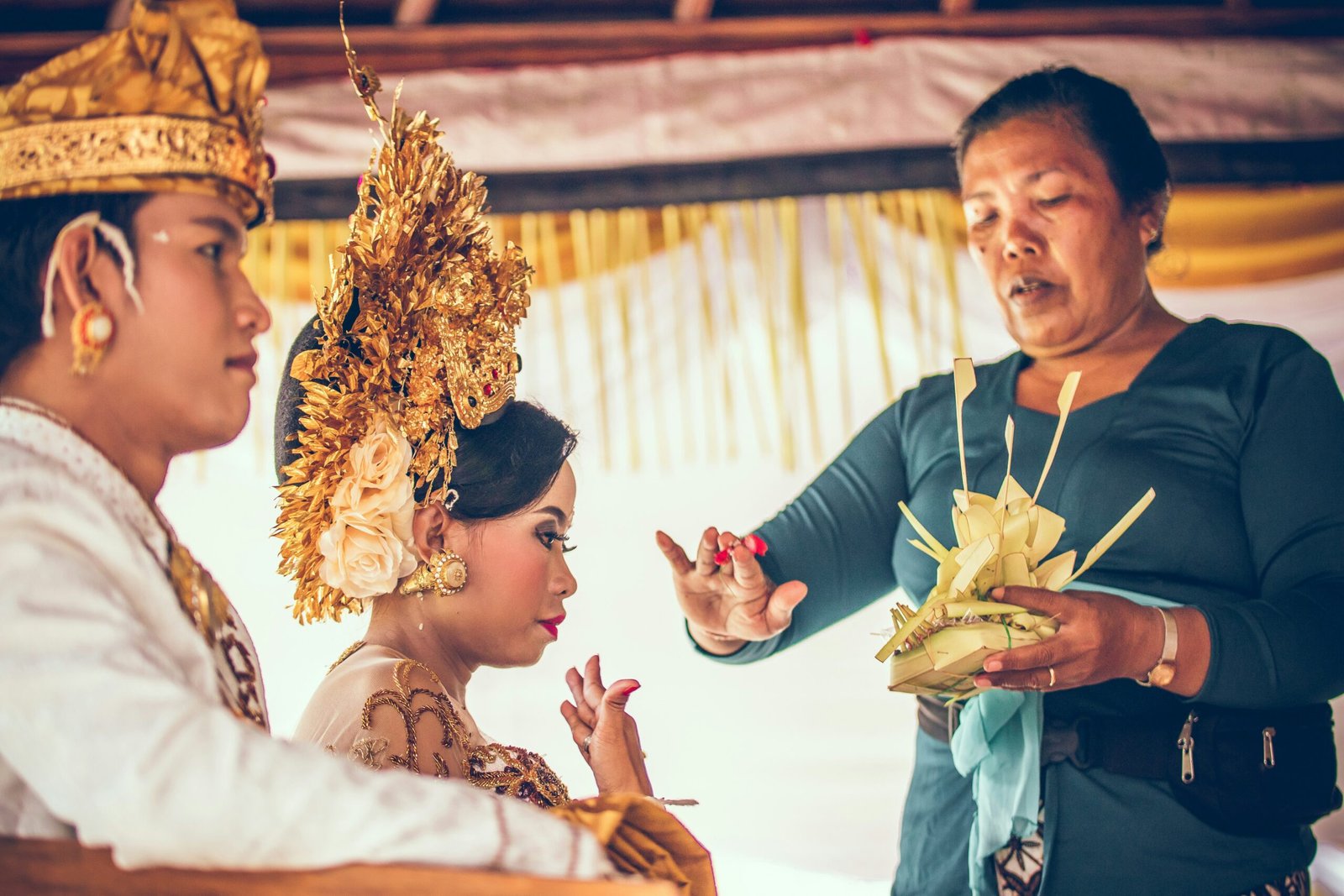
The temple’s anniversary, known as piodalan, is held every 210 days on Tuesday Kliwon Medangsia. During this sacred occasion, the temple becomes a vibrant spiritual center. Devotees dressed in traditional attire gather to present offerings (banten), recite prayers, and participate in ritual processions. The atmosphere is marked by the scent of incense, the sound of gamelan music, and the presence of priests leading purification rites.
Unlike annual celebrations in the Gregorian calendar, the Pawukon system reflects a cyclical understanding of time, emphasizing balance and continuity rather than linear progression. This reinforces Taman Ayun’s role as a living spiritual space, where religious practice continues uninterrupted across generations.
Why Visit Taman Ayun?
Taman Ayun is perfect for travelers who appreciate:
Quiet and Contemplative Spaces
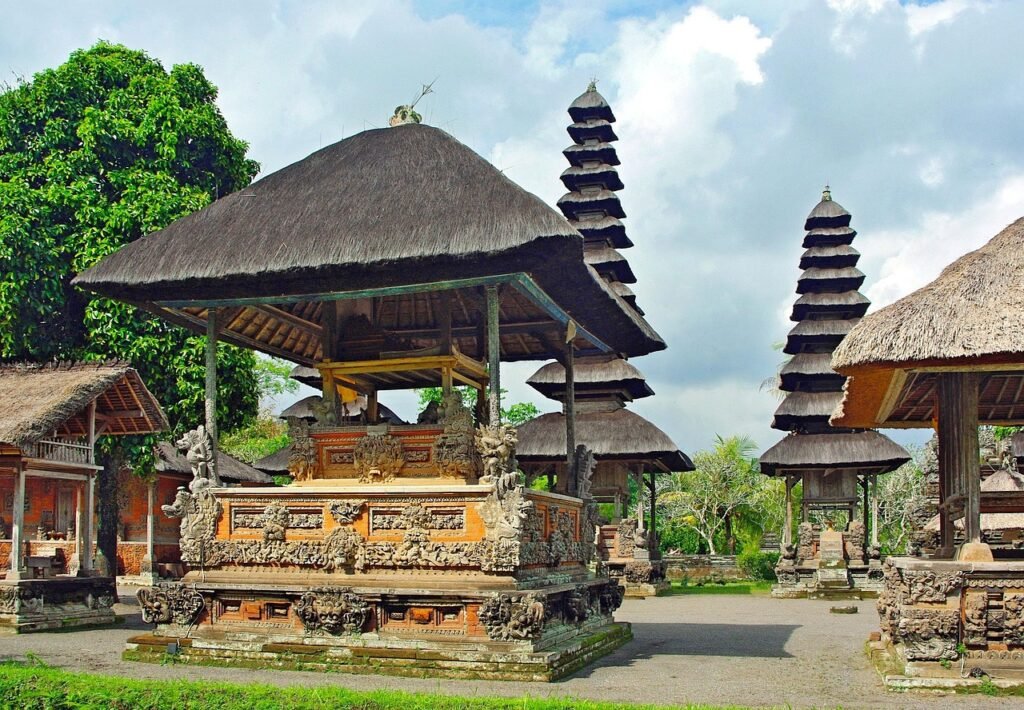
Taman Ayun Temple is known for its calm and contemplative atmosphere, making it an ideal destination for travelers who prefer a quieter cultural experience. Compared to Bali’s more crowded temples, this site offers open courtyards, wide walking paths, and expansive garden areas that allow visitors to explore without feeling rushed or overwhelmed.
The temple is surrounded by water canals and greenery that create a natural sense of isolation from the outside world. The gentle sound of flowing water, combined with the symmetry of the landscape, encourages reflection and mindfulness, making Taman Ayun a perfect place to slow down and appreciate Bali’s spiritual ambience.
Cultural Immersion in Balinese Spirituality and Historical Traditions
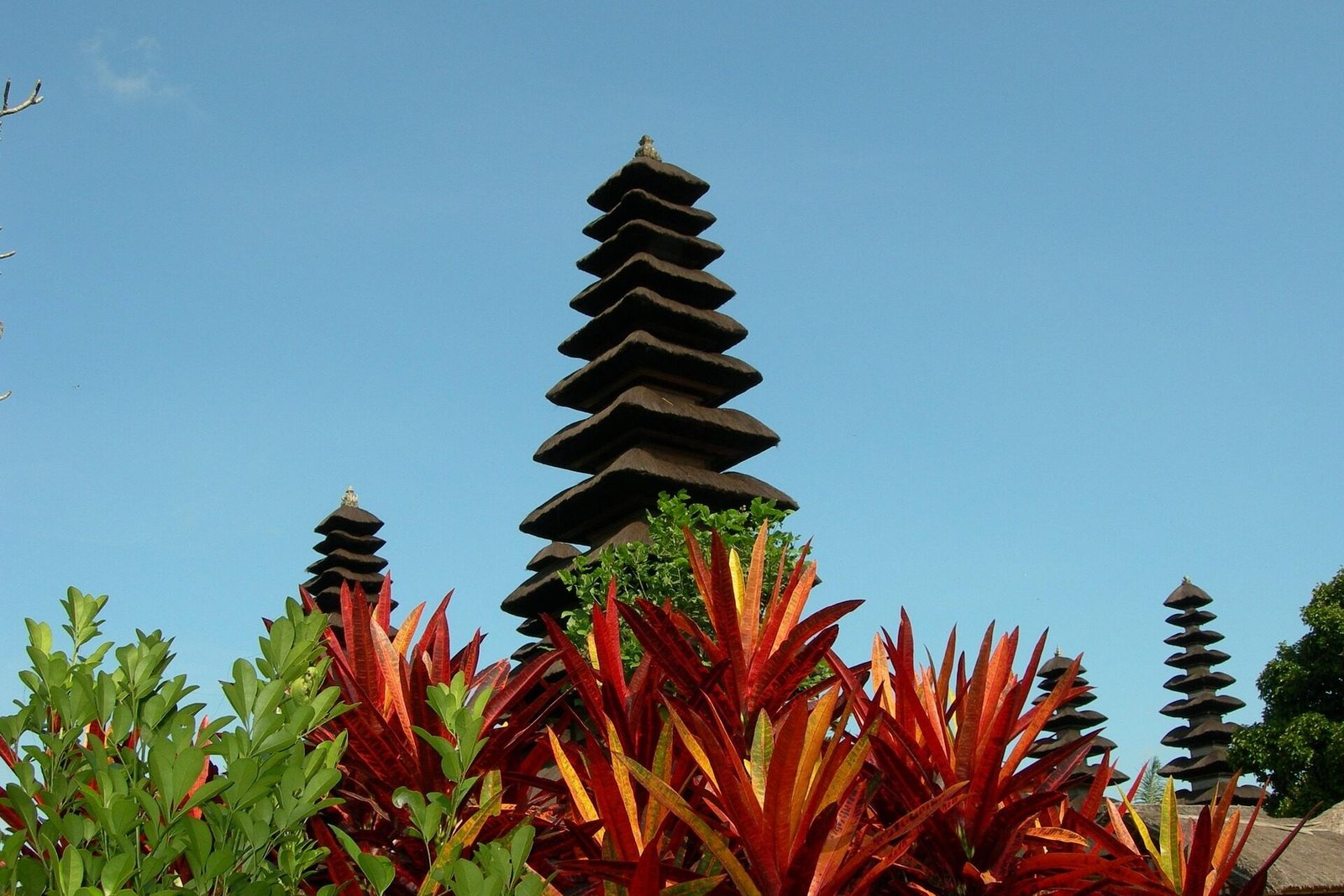
Taman Ayun Temple provides meaningful insight into Balinese Hindu spirituality and royal heritage. As the former state temple of the Mengwi Kingdom, it played a central role in religious ceremonies, ancestor worship, and political rituals, reflecting the close relationship between spirituality and leadership in traditional Balinese society.
Today, the temple remains actively used by local communities, following the Balinese Pawukon calendar for ceremonies and festivals. Visitors may observe worshippers preparing offerings or participating in rituals, offering an authentic glimpse into living traditions that continue to shape daily life in Bali.
Photography Opportunities
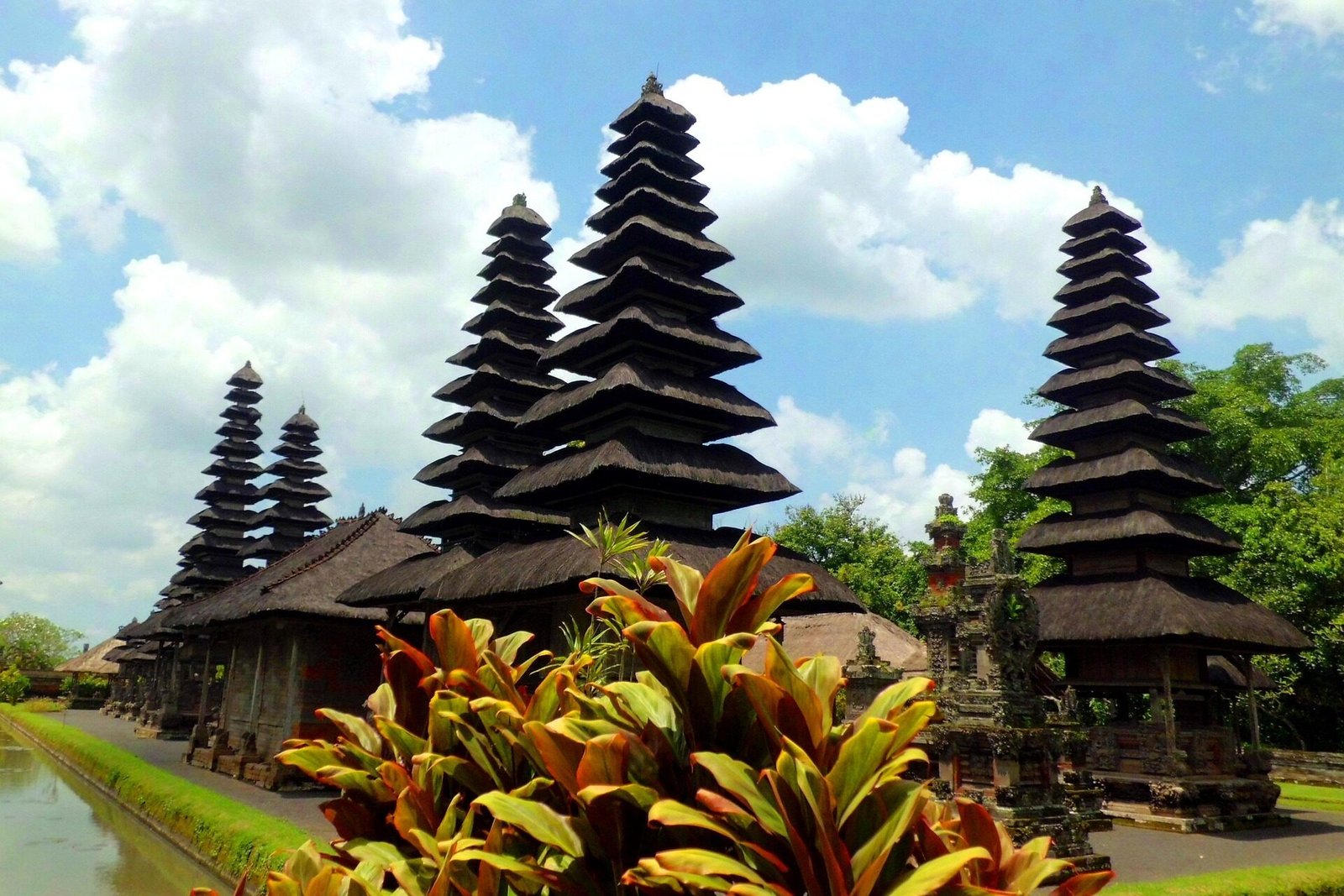
The visual appeal of Taman Ayun Temple makes it a favorite location for photography enthusiasts. Its surrounding moats and lotus ponds create beautiful reflections of the temple structures, especially during early morning or late afternoon when the light is soft and golden.
The multi-tiered meru shrines, framed by manicured gardens and traditional gateways, offer strong composition elements for architectural and landscape photography. With fewer crowds than other famous temples, photographers can capture clean, uninterrupted views that highlight the temple’s elegance and symmetry.
Traditional Architecture and Landscaped Gardens
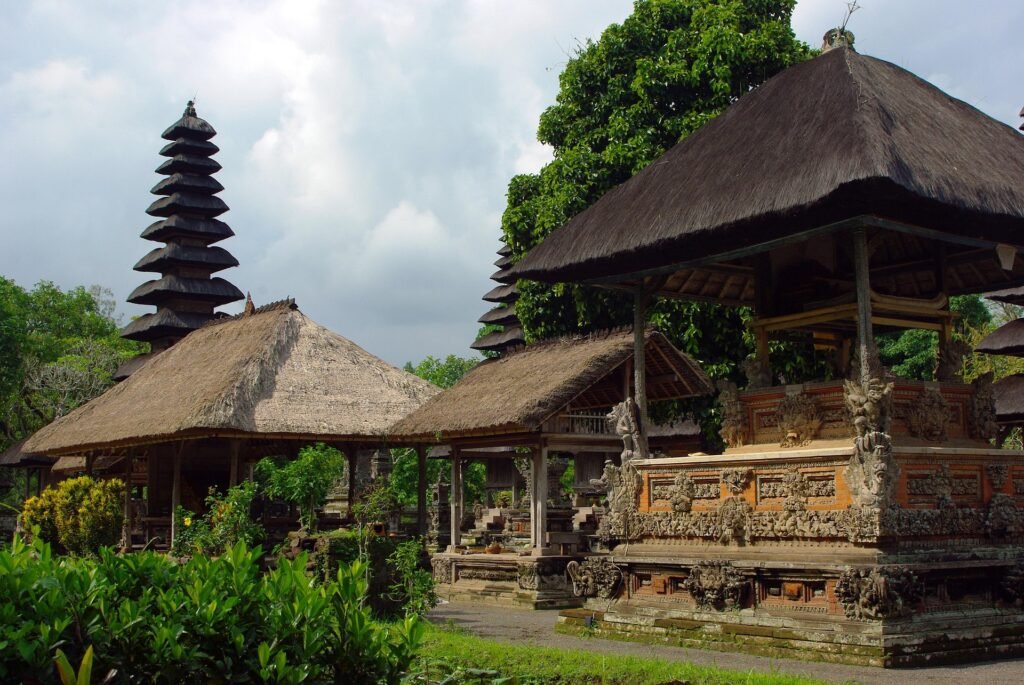
Taman Ayun Temple showcases classical Balinese architecture through its carefully structured layout and symbolic design. The complex follows the Tri Mandala concept, dividing the temple into outer, middle, and inner courtyards that represent different levels of spiritual significance.
These sacred structures are seamlessly integrated into landscaped gardens featuring trimmed lawns, tropical plants, and surrounding water features. The moat encircling the temple enhances both its visual beauty and symbolic meaning, emphasizing harmony between architecture, nature, and spiritual belief.
Practical Tips for Visiting Taman Ayun Temple
Location & How to Get There
Address: Jalan Ayodya No.10, Mengwi, Badung, Bali, Indonesia
Taman Ayun Temple is located in Mengwi Village, about 18–20 kilometers north of Denpasar and roughly 45–60 minutes by car from popular tourist areas such as Kuta, Seminyak, and Canggu, depending on traffic.
The most convenient way to reach the temple is by:
- Private car or hired driver, which allows flexibility and comfort.
- Scooter or motorbike, suitable for experienced riders familiar with Bali’s traffic.
- Guided tour, often combined with other attractions in Mengwi or central Bali.
Public transportation options are very limited, so independent travelers are strongly advised to arrange private transport in advance.
Best Time to Visit
Understanding the best time to visit Indonesia is essential for travelers planning to explore cultural landmarks like Taman Ayun Temple. The ideal time to visit is during the dry season, from April to October, when weather conditions are pleasant and outdoor exploration is more comfortable.
The best hours to visit Taman Ayun Temple are:
- Early morning (8:00–10:00 AM)
- Late afternoon (3:30–5:30 PM)
During these hours, the weather is cooler, the lighting is softer for photography, and the atmosphere is more peaceful. Morning visits are ideal for travelers seeking a quiet experience, while afternoon visits offer beautiful natural light reflecting off the temple’s surrounding moat.
To avoid crowds:
- Visit on weekdays rather than weekends.
- Avoid visiting during major Balinese religious holidays unless you specifically want to witness ceremonies (which may limit access to certain areas).
Respecting Sacred Areas & Temple Etiquette
Taman Ayun Temple is an active place of worship, not just a tourist attraction. Visitors are expected to follow local customs and show respect at all times.
Important guidelines include:
- Restricted Areas: Some inner courtyards (Utama Mandala) may be closed to visitors, especially during ceremonies. Access is reserved for worshippers only.
- Dress Code:
- Wearing a sarong and sash is recommended when entering the temple complex.
- If you don’t bring your own, sarongs are usually available for rent or provided at the entrance.
- Behavior:
- Speak softly and avoid disruptive behavior.
- Do not climb on temple structures or shrines.
- Avoid pointing your feet toward shrines when sitting.
- During Ceremonies:
- Photography may be allowed in outer areas, but always ask or observe local guidance.
- Do not block pathways used by worshippers.
Additionally, women who are menstruating are traditionally advised not to enter the temple, in accordance with Balinese Hindu customs.
Additional Visitor Tips
- Entrance Fee: A small entrance fee applies; bring cash for convenience.
- Photography: Tripods may be restricted in certain areas; check with staff before use.
- Facilities: Toilets and small souvenir stalls are available near the entrance.
- Combine Your Visit: Taman Ayun Temple pairs beautifully with other cultural attractions in central Bali. Many travelers combine their visit with destinations such as Ubud Palace, Alas Kedaton Monkey Forest, or rice terrace areas
Visit Taman Ayun with Semeru Travel
Why visit Taman Ayun alone when you can have a seamless, enriching experience with Semeru Travel?
We often include Taman Ayun Temple as a key highlight in our Bedugul & Tanah Lot Full Day Tour. Our local guides will share deep insights into the royal history and spiritual significance of the temple that you won’t find in any guidebook.
Why book with us?
- Private Transportation: Comfortable, air-conditioned cars with professional drivers.
- Tailored Itinerary: Want to stay longer at the temple? We adjust the pace to suit you.
- Authentic Stories: Our guides are locals who live and breathe Balinese culture.
FAQ about Taman Ayun Temple
1. Is Taman Ayun Temple a UNESCO World Heritage Site?
Yes. Taman Ayun Temple is included in the Cultural Landscape of Bali Province, which was designated as a UNESCO World Heritage Site in 2012 due to its cultural, spiritual, and environmental significance.
2. What does “Taman Ayun” mean?
“Taman Ayun” translates to “beautiful garden” in Balinese. The name reflects the temple’s serene setting, surrounded by ponds, lush greenery, and carefully maintained gardens.
3. Can visitors enter the inner temple area?
Visitors are generally allowed to explore the outer and middle courtyards. However, access to the inner sanctuary (Utama Mandala) may be restricted, especially during religious ceremonies, as it is reserved for worshippers.
4. How long does it take to explore Taman Ayun Temple?
A typical visit takes around 30 to 60 minutes, depending on whether you want to stroll around the gardens, take photos, or learn more about the temple’s history and architecture.
5. Is Taman Ayun Temple suitable for families and first-time visitors?
Yes. The temple’s flat walking paths, open gardens, and calm atmosphere make it suitable for families, couples, and first-time visitors interested in Balinese culture and h