
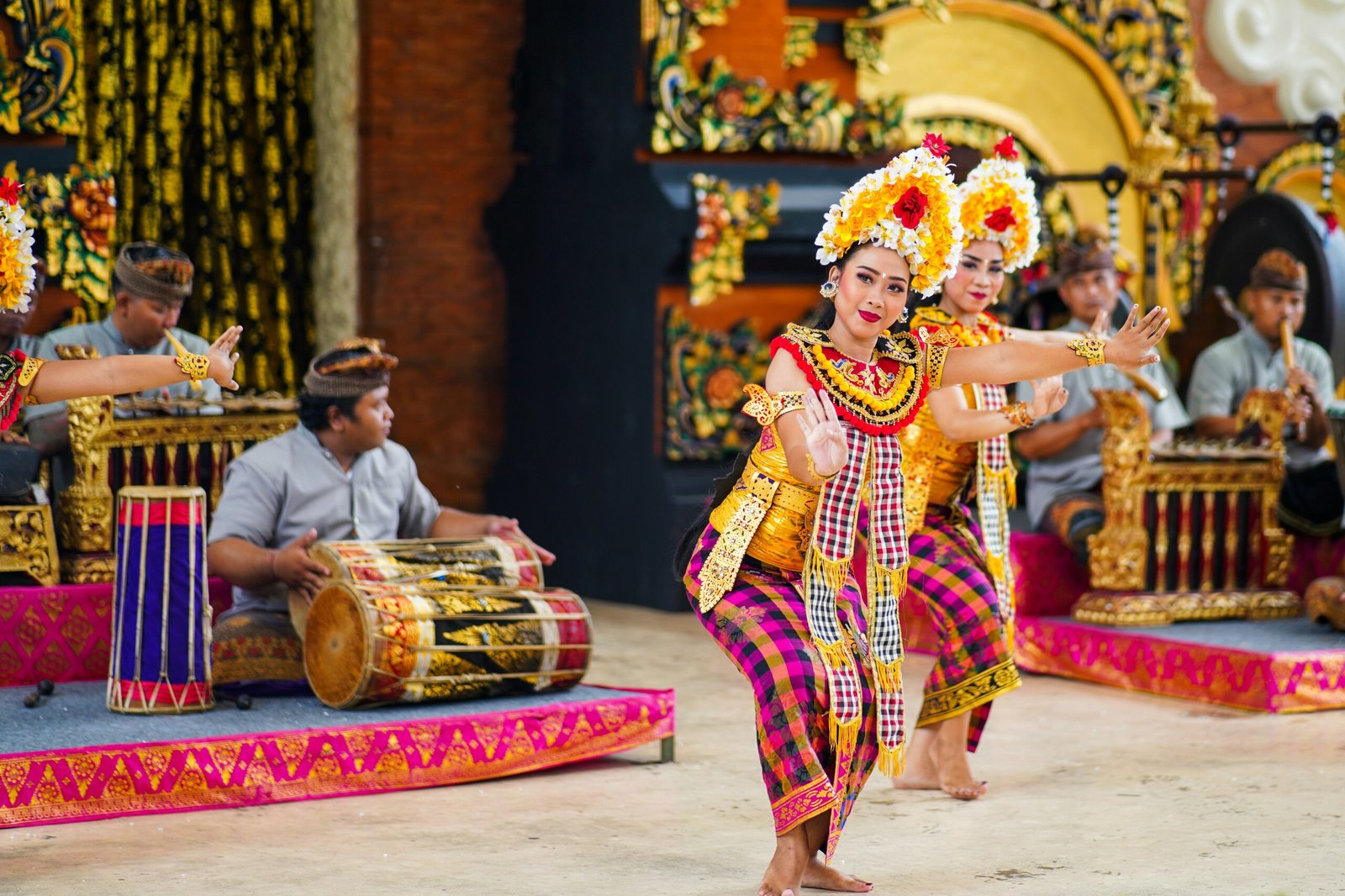
If you’re planning a trip to Bali and wondering when to catch a traditional dance performance at one of the island’s most iconic venues, you’ve come to the right place. The dance shows held at Ubud Palace, locally known as Puri Saren Agung, are among the most memorable cultural experiences Bali has to offer. But timing matters more than most travelers realize.
This guide breaks down everything you need to know: which nights have the best performances, what each dance type involves, how to get tickets, and what to expect depending on the season you visit.
Why Ubud Palace Is the Ideal Setting for Balinese Dance
There’s something almost cinematic about watching a Kecak or Legong performance unfold inside the open-air courtyard of Ubud Palace. The stone carvings, the flickering torches, the elaborately costumed dancers, the palace transforms into a living stage every evening, and the setting alone elevates the performance to something far beyond a typical tourist show.
Unlike open-air amphitheaters or hotel lobby events, the palace courtyard creates an intimate atmosphere that places the audience close to the performers. The architecture frames the performance naturally, and the spiritual weight of the venue, a functioning royal residence and cultural landmark since the early 1800s, lends the entire experience an authenticity that’s increasingly rare in Bali’s more commercialized parts.
Performance Schedule at Ubud Palace: A Night-by-Night Breakdown
Performances are held almost every evening throughout the week, typically starting around 7:30 PM and running for approximately 60 to 90 minutes. Each night features a different style of traditional Balinese dance, so the “best” night to attend really depends on which performance style resonates with you most.
Here’s a general breakdown of what to expect on each night:
| Night | Dance Type | Style & Theme |
|---|---|---|
| Monday | Legong & Barong | Grace, mythology, good vs. evil |
| Tuesday | Kecak Fire Dance | Dramatic, chorus-driven, no instruments |
| Wednesday | Legong Dance | Classical female court dance |
| Thursday | Wayang Kulit (Shadow Puppet) | Storytelling through silhouette art |
| Friday | Kecak & Fire Dance | Fire ritual combined with Ramayana epic |
| Saturday | Legong Mahabharata | Epic narrative through refined movement |
| Sunday | Barong & Keris Dance | Spiritual battle between forces of nature |
Note: The schedule above is representative and subject to change based on local ceremonies, public holidays, and cultural events. Always confirm the current program directly at the palace ticket counter or through a local travel agent before your visit.
The Kecak Fire Dance: Most Dramatic, Most Requested
If you have only one night in Ubud, the Kecak Fire Dance is the performance most visitors recommend. Unlike other Balinese dances that use a gamelan orchestra, Kecak is powered entirely by the human voice, a chorus of 50 to 150 men chanting in rhythmic unison, creating a hypnotic wave of sound that fills the courtyard.
The performance narrates scenes from the Ramayana, the ancient Hindu epic, and culminates in a fire-walking sequence that’s genuinely striking. It’s theatrical, percussive, and emotionally engaging, even for visitors with no background in Balinese culture.
Tuesday and Friday evenings typically feature Kecak performances at the palace. Friday tends to draw slightly larger crowds, so arriving early is advisable on that night.
The Legong Dance: Elegance and Precision
For travelers who prefer something more refined and visually intricate, Legong is the performance to seek out. Rooted in the royal courts of 19th-century Bali, Legong is performed by young female dancers trained from childhood. Every detail, the angle of a finger, the tilt of the head, the arc of the eyes, carries narrative and symbolic meaning.
Watching a Legong performance is a study in control and expression. It’s slower-paced than Kecak, but no less captivating. Monday, Wednesday, and Saturday evenings typically feature Legong-centered programs.
Barong & Keris Dance: Spiritual and Symbolic
The Barong represents the protective spirit of the village, a lion-like creature that battles Rangda, the demon queen, in a ritual enactment of Bali’s eternal spiritual balance. Dancers armed with keris (ceremonial daggers) enter trance-like states during the performance, making this one of the most spiritually charged shows at the palace.
Sunday evenings are typically reserved for the Barong and Keris Dance. If you’re interested in understanding the deeper spiritual dimensions of Balinese Hindu culture, this is the performance that offers the most insight.
Best Time of Year to Visit: Dry Season vs. Wet Season
Dry Season (April to October): Optimal for Outdoor Performances
The dry season is widely considered the best period to experience dance shows at Ubud Palace. Evenings are warm but manageable, and the risk of rain interrupting an outdoor performance is significantly lower.
The months of July and August coincide with peak travel season, meaning more shows may be scheduled, and the atmosphere in Ubud is especially lively.
One consideration: peak season also brings larger crowds, and tickets for popular nights can sell out by early afternoon. If you’re visiting in July or August, plan to secure your tickets by 3:00 PM at the latest.
Shoulder Season (April–May and September–October): The Sweet Spot
If you want the best of both worlds, good weather and thinner crowds, the shoulder months are ideal. April, May, September, and October tend to have reliable dry evenings, fewer tourists competing for tickets, and a more relaxed atmosphere overall. Many experienced Bali travelers consider this the most enjoyable time to be in Ubud.
Wet Season (November to March): Lower Crowds, Higher Risk
Performances continue during the wet season, but afternoon rain showers are common and can occasionally affect evening shows. That said, wet season in Ubud is not a monsoon, it rarely rains all day. The evenings are often clear, and performances proceed as scheduled more often than not.
The advantage of wet season travel is obvious: Ubud is quieter, prices are lower, and you’ll find it much easier to secure tickets on the day of your visit. If you don’t mind a small element of unpredictability, wet season can be a genuinely rewarding time to experience Ubud’s cultural scene.
Practical Tips Before You Go
Getting Tickets
Tickets are sold directly at the palace entrance; there is no advance online booking system. The ticket booth typically opens from 3:00 PM to 5:00 PM. Prices are affordable, usually in the range of IDR 100,000 –150,000 per person (subject to change).
For travelers who prefer not to manage logistics independently, booking through a local cultural tour package simplifies the process. Your guide can handle tickets, transportation, and provide context that enriches the performance itself.
What to Wear
The palace is a sacred royal compound, so modest dress is expected. Shoulders and knees should be covered, and sarongs are available for rent or purchase near the entrance if needed. Arriving dressed respectfully also signals cultural awareness, which is genuinely appreciated by locals.
Arriving Early
Doors typically open 30–45 minutes before showtime. Arriving early is worthwhile for two reasons: you’ll secure a better seat (closer and more central is preferable for photography and visibility), and you’ll have time to absorb the atmosphere of the courtyard before the performance begins.
Pairing Your Visit with Other Cultural Experiences
A dance performance at the palace pairs naturally with other cultural stops in and around Ubud. If you’re interested in understanding Bali’s living traditions more broadly, consider combining your visit with a day trip to Taman Ayun Temple, one of Bali’s royal water temples and a UNESCO World Heritage site. The temple complex offers insight into the same Hindu-Balinese spiritual worldview that underlies the dance traditions performed at the palace each evening.
For travelers drawn to the ceremonial dimension of Balinese culture, witnessing or learning about a traditional Balinese wedding can also add meaningful context to the artistic traditions you’ll encounter at the palace, since many of the dances performed there draw directly from the same ceremonial repertoire used in religious and lifecycle rituals.
Summary: Which Night Should You Choose?
There’s no single “wrong” night to attend a performance at Ubud Palace. Every show is genuine, professionally performed, and rooted in centuries of tradition. That said, here’s a quick guide based on what you’re looking for:
- Most dramatic experience → Kecak Fire Dance (Tuesday or Friday)
- Most visually refined → Legong Dance (Wednesday or Saturday)
- Most spiritually significant → Barong & Keris Dance (Sunday)
- Best for first-time visitors → Any Friday evening (combines Kecak with fire ritual)
- Best for avoiding crowds → Monday, Tuesday, or Wednesday evenings
FAQ
Do I need to book tickets in advance for dance shows at Ubud Palace?
Tickets are sold on-site and cannot be reserved online. The ticket counter typically opens between 3:00 PM and 5:00 PM. During peak season (July–August), arriving early in the afternoon to purchase tickets is strongly recommended, as popular nights can sell out.
How long does a typical performance last?
Most dance performances at the palace run between 60 and 90 minutes without intermission. Showtime usually begins at 7:30 PM, so you can plan to be done by 9:00 PM at the latest, leaving time for dinner in Ubud’s central area.