

Every travel blog calls Baluran National Park the “Africa van Java.” However, few of them actually test the claim. This Baluran vs African safari comparison tests it against Kenya’s Masai Mara and Tanzania’s Serengeti.
The short answer? Baluran looks African in the dry season, yet it offers a very different trip. Here is what matches, what doesn’t and what the 2026 fires changed.
Baluran at a Glance
- Where: Situbondo, East Java, north of Banyuwangi
- Size: about 25,000 hectares, roughly 40% of it savanna
- Headline animals: banteng, Timor deer, wild water buffalo, peafowl, macaques
- Closed: every Monday, except national holidays
Where the “Africa van Java” Nickname Comes From
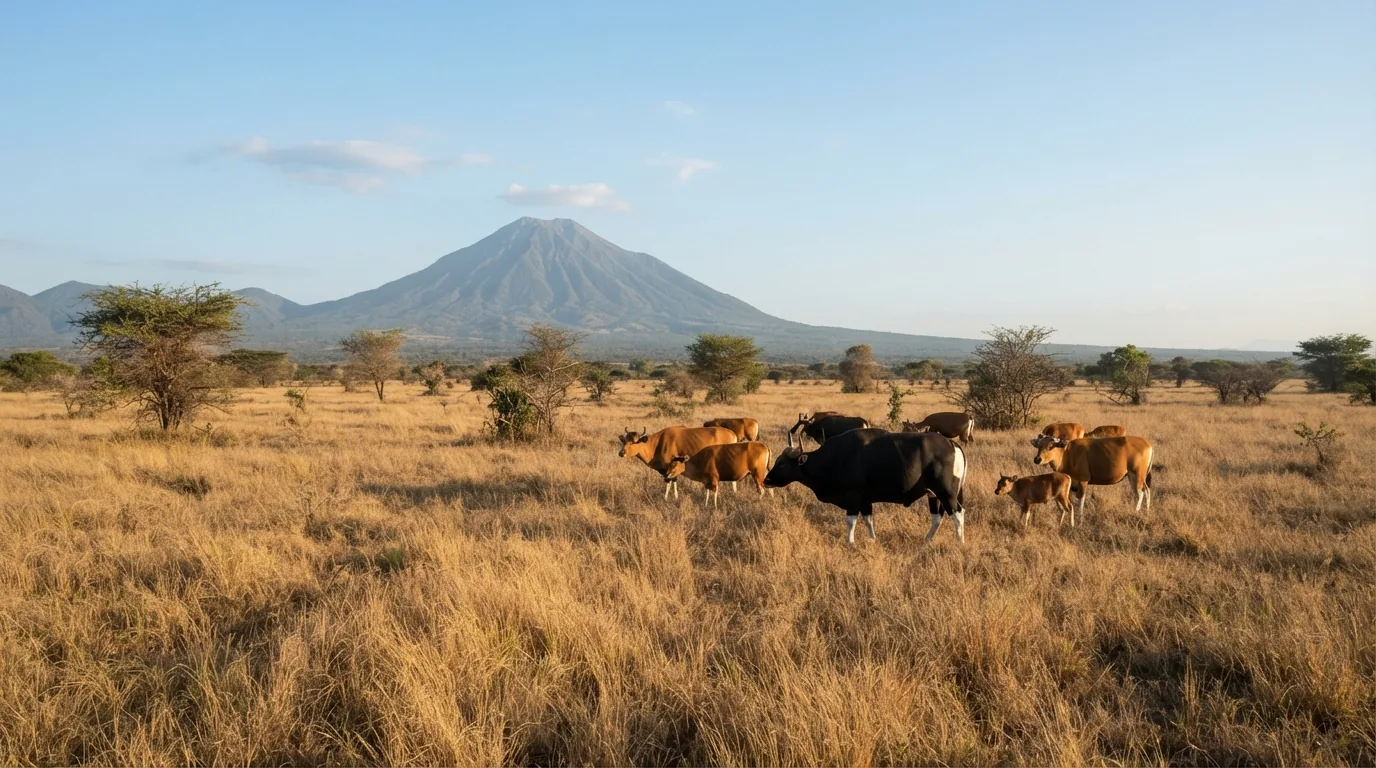
The nickname comes from the landscape. Savanna covers around 40% of the park. In the dry season, the grass turns gold and thorny trees dot the plains. Behind the Bekol savanna, Mount Baluran rises like an African peak. As a result, many photos look like they came straight from Kenya.
Still, the likeness mostly stops at the scenery. Baluran has no lions, elephants or giraffes. Instead, it has Java’s own grazers, and they deserve attention on their own terms.
Baluran vs African safari Wildlife: Banteng vs Buffalo, Timor Deer vs Gazelle
Banteng are Baluran’s flagship species. These wild cattle play the role that Cape buffalo play in Africa: big, wary grazers on open ground. Park counts have put the banteng population at around 211 animals, so every sighting feels special. Herds of wild water buffalo also roam the park and look much closer to the African version.
Timor deer fill the gazelle’s role. They graze in groups and freeze when a vehicle stops. Meanwhile, green peafowl, long-tailed macaques and the occasional dhole (Asian wild dog) add variety. A Javan leopard lives here too, although almost nobody sees it.
The Acacia Story: Baluran’s Accidental African Trees
Part of Baluran’s African look really comes from Africa. In the 1960s, park managers planted Acacia nilotica, a thorny tree native to Africa and South Asia, as a firebreak. They wanted it to stop savanna fires from spreading into the teak forest.
Unfortunately, the acacia spread across the Bekol savanna instead. It crowded out the grasses that banteng and deer eat. At one point, it covered close to half the savanna. Rangers still remove acacia every year to keep the grassland open. So those photogenic thorn trees actually belong to an invasive species.
Baluran After the 2026 Fires
The 2026 dry season hit Baluran hard. Between May and August, fires burned more than 900 hectares of savanna and teak forest. In early September, forestry officers also arrested a man they suspect of starting fires on purpose.
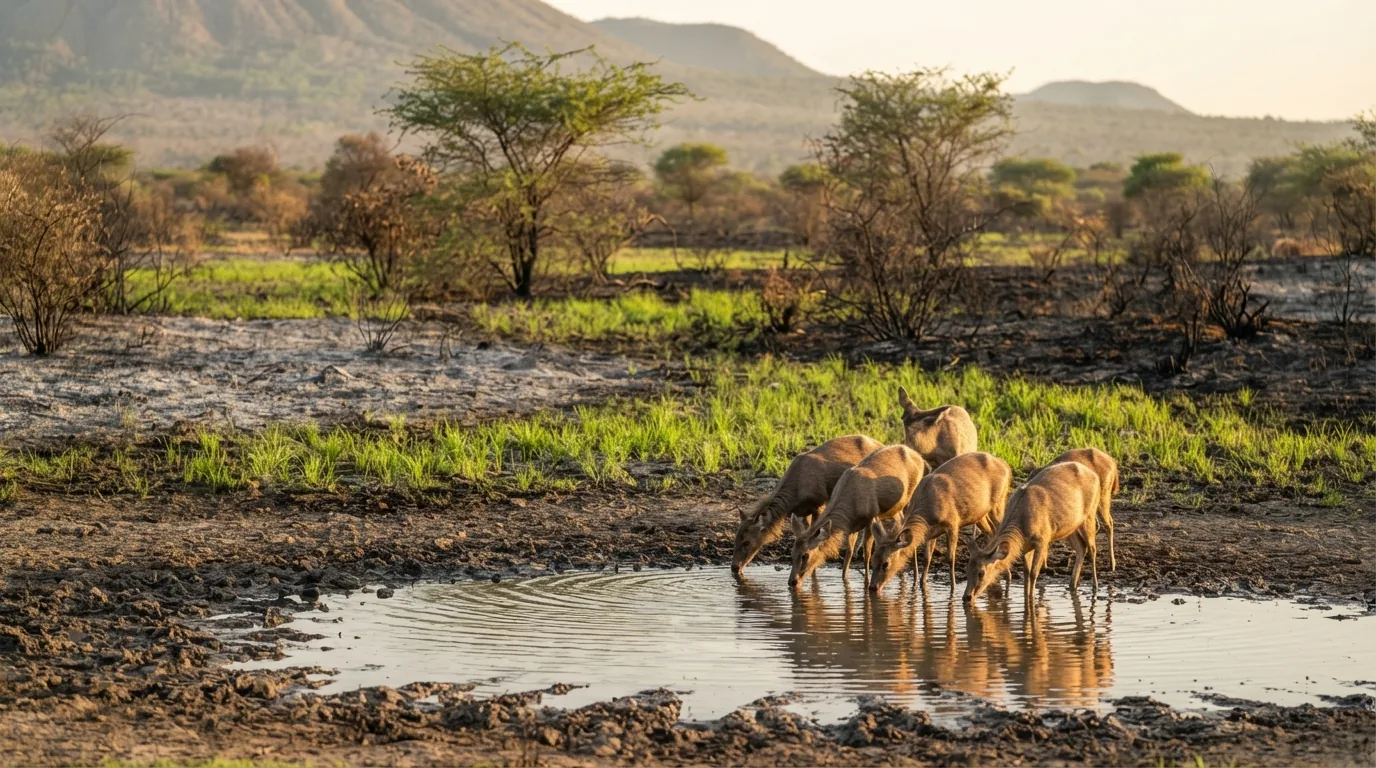
Fire does not only bring bad news for a savanna, though. Grass regrows fast after the first rains, and fresh shoots draw grazers into the open. Even so, burnt patches can stay grey for weeks. By the rainy months, most of the savanna turns green again.
Before you go, check the calendar. The park closes every Monday unless that Monday falls on a national holiday. On top of that, its 2026 closure calendar lists extra closure dates, so confirm with your guide first.
Baluran vs African safari: Cost and Time
In the Masai Mara, adults pay a park fee of US$100 a day from January to June. From July to December, that fee doubles to US$200. On top of that, budget safaris there run about US$250 to US$350 per person per day. Serengeti charges around US$83 per adult per day in park fees.
Baluran, by contrast, charges foreign visitors roughly Rp165,000 to Rp240,000 per day. Getting there takes a ferry from Bali and a short drive, not two long-haul flights.
| Feature | Baluran (East Java) | Masai Mara / Serengeti |
|---|---|---|
| Big Five? | No (rare Javan leopard, wild water buffalo) | Yes, although rhinos are scarce |
| Park size | About 250 km² | Mara about 1,510 km²; Serengeti about 14,750 km² |
| Daily cost | Park ticket roughly Rp165,000 to Rp240,000 per foreign adult | Mara fee US$100 to US$200, Serengeti about US$83, plus US$250+ for a budget safari |
| Best time | July to October (dry season) | July to October (migration season in the Mara) |
| Trip length from Bali | 1 to 2 days, or 4 days with Ijen | 7 to 10 days, including long-haul flights |
If your group mainly wants lions and zebras, a Bali night safari package works as a different option. You see African animals at a safari park, although none of them roam wild.
How to Add Baluran to an Ijen Trip
Baluran and Ijen share the same corner of Java, so they pair naturally. Most travelers hike Ijen for the blue fire before dawn and rest at the hotel. The next morning, they visit Baluran while animals gather at the waterholes.
Our four-day baluran national park safari with the Ijen trek covers transfers, three hotel nights, an English-speaking guide and permits. For the best light, start early, because the animals retreat into the shade by midday.
So, who wins the Baluran vs African safari match-up? Africa wins on wildlife. However, Baluran delivers a wild savanna morning at a fraction of the cost and travel time. A local Indonesia travel agency can also help you avoid Mondays, fire closures and the midday heat.
Baluran vs African safari FAQ
Can you see the Big Five in Baluran?
No. Baluran has none of Africa’s Big Five on regular view. Instead, expect banteng, Timor deer, wild water buffalo, peafowl and macaques. The park’s Javan leopard rarely shows itself.
Is Baluran National Park open every day?
No. The park closes every Monday unless that Monday falls on a national holiday. Its 2026 closure calendar also adds extra dates, so check before you travel.
When is the best time for a Baluran safari?
Go in the dry season, roughly July to October. At that time the grass turns gold and animals gather near the waterholes. However, late dry-season fires can leave some burnt patches.