When crossing the narrow straits separating Java from Bali, or stepping off a boat onto the lesser-known islands of the Nusa archipelago, the air changes. It becomes thick with the scent of burning incense, sweet frangipani blossoms, and the salty tang of the Indian Ocean. For travelers seeking more than just a typical beach vacation, this unique pocket of the world offers an immersive encounter with an unbroken living tradition: Balinese Hinduism.
But what is it about this specific island environment that makes its spiritual core feel so deep, tangible, and omnipresent? The answer lies not just in the ancient texts, but in how an entire population weaves the sacred into the fabric of daily life, geography, and community structure.
The Landscape as a Living Temple
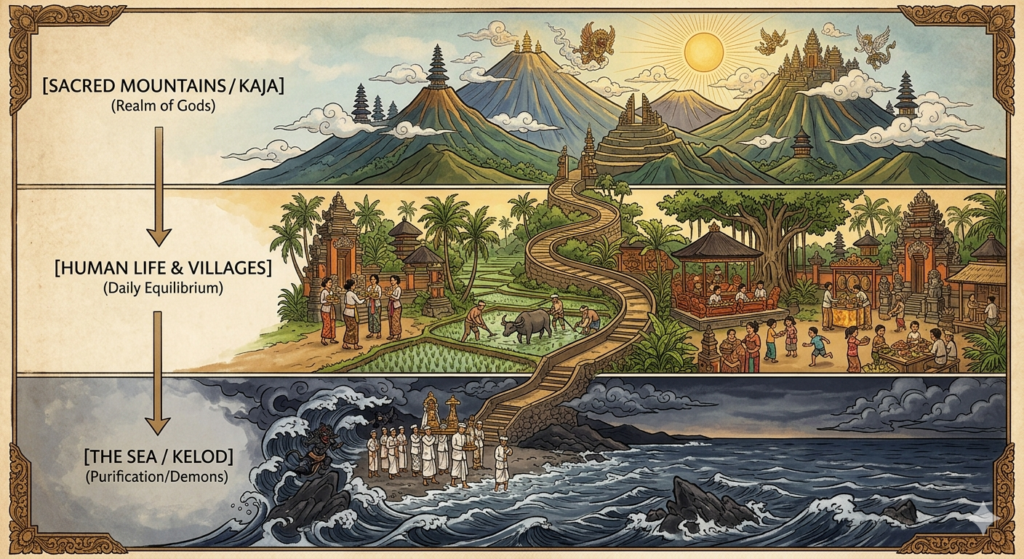
Many Western traditions confine spirituality to specific days of the week or dedicated buildings. However, in the unique Hindu landscape of Bali and its surrounding islands, people consider the entire topography sacred. Here, geography dictates spirituality through a concept that people know as Kaja and Kelod.
- Kaja: Direction toward the sacred mountains (the realm of the gods).
- Kelod: Direction toward the sea (the realm of underworld spirits and purification).
Mount Agung, an active volcano, acts as the spiritual compass of the island. It is the center of the universe, and living in its shadow forces a constant, daily awareness of forces far greater than humanity.
When arranging a trip through an experienced Indonesia tour operator, travelers often notice that even the architecture of simple homestays aligns perfectly with these cosmic coordinates.
Tri Hita Karana: The Philosophy of Threefold Harmony
At the heart of the island’s deep spiritual resonance is the guiding philosophy of Tri Hita Karana, which translates literally to the “three causes of prosperity” or well-being. It is a blueprint for happiness that requires maintaining a strict balance between three distinct relationships:
1. Harmony with the Divine (Parhyangan)
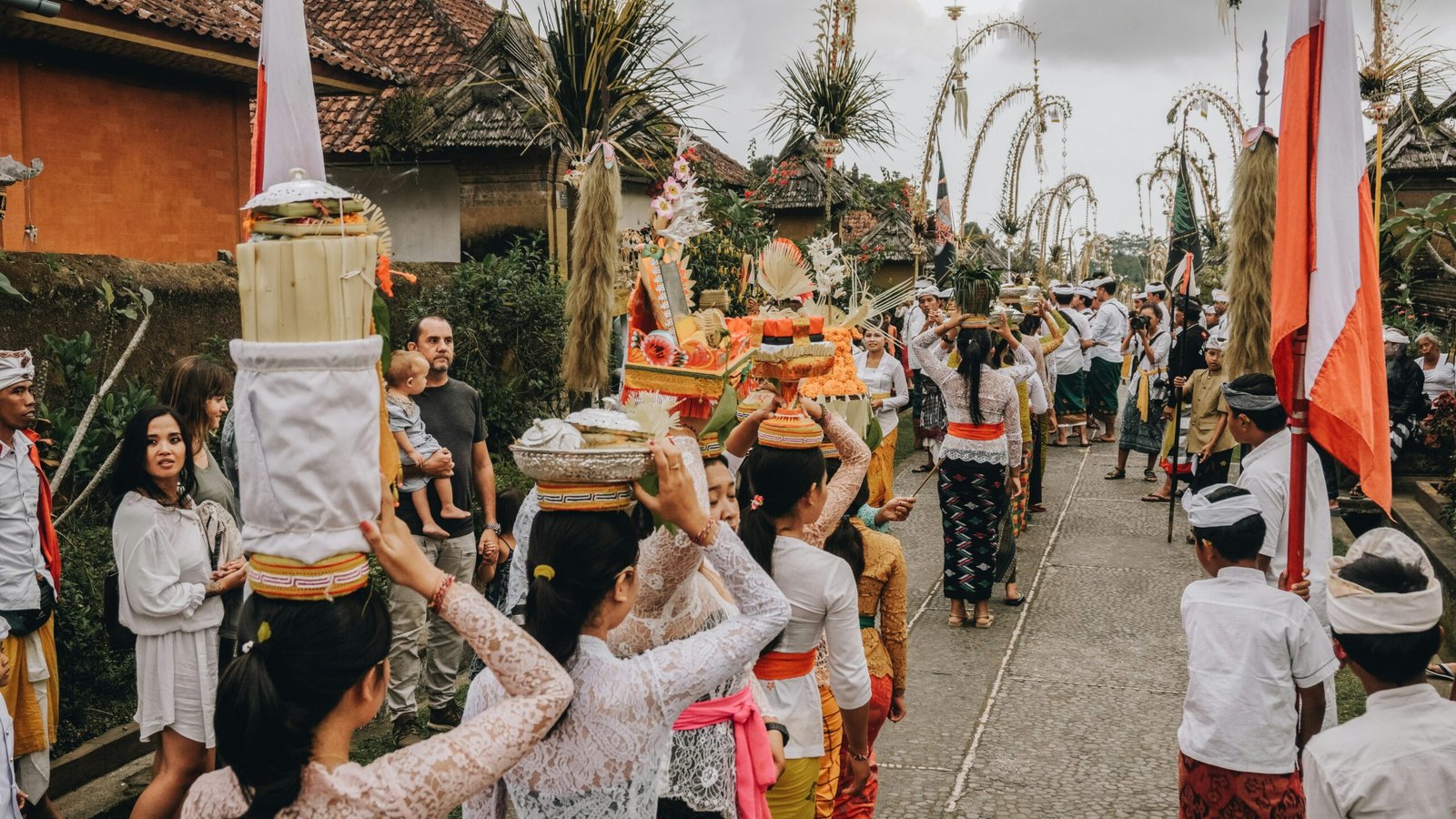
This is visible in the endless cycle of temple festivals (odalan), temple prayers, and the daily creation of canang sari, the small palm-leaf baskets filled with flowers, rice, and incense placed on family shrines, sidewalks, and even car dashboards.
2. Harmony among Humans (Pawongan)
The island operates on a communal system called the Banjar. Every neighborhood or village shares collective responsibility for marriages, funerals, temple upkeep, and traditional law. This deep social fabric prevents individualism from eroding spiritual duties.
3. Harmony with Nature (Palemahan)
Nature is not something to be conquered, but managed in partnership. The most brilliant manifestation of this is the Subak system, an ancient, UNESCO-recognized cooperative water management system that binds rice farmers together with water temples.
Ritual vs. Religion: A Day in the Life
To the outside observer, Balinese Hinduism looks like an endless series of theatrical rituals. To locals, these rituals are a functional necessity to maintain the equilibrium of the universe. The islanders do not merely believe their faith; they practice it physically every single day.
| Spiritual Element | Everyday Expression | Meaning for the Traveler |
| Canang Sari | Daily floral offerings on the ground | A reminder of gratitude and detachment. |
| Melukat | Holy water purification rituals at sacred springs | A tangible cleansing of negative energies. |
| Odalan | Village temple anniversary festivals | An invitation to witness gamelan music, dance, and deep community bonding. |
| Nyepi | The Day of Silence (Total shutdown of the island) | A collective reset button for the island’s spiritual energy. |
For anyone booking their holiday travel, planning a visit around these spiritual milestones offers a profound look into a culture that values cosmic balance over commercial productivity. During Nyepi, for instance, the entire island shuts down, no lights, no traffic, no airport operations, allowing the earth a full 24 hours to breathe and meditate.
The Sacred Arts: Where Devotion Meets Expression
In this unique cultural enclave, there is traditionally no word for “artist.” That is because art is not seen as a career or a hobby; it is a form of spiritual service (ngayah).
Traditional Dance as Prayer
Dances like the Legong or the Barong are not merely commercial entertainment for tourists. When performed at a temple festival, the dancers frequently enter deep trances, acting as physical vessels for divine energies or ancestral spirits. Every finger movement, glance, and posture is designed to tell the story of the eternal battle between order (Dharma) and chaos (Adharma).
Gamelan and the Soundscape of the Soul
The metallic, shimmering resonance of the gamelan orchestra provides the soundtrack to the island. Communities consider the instruments sacred objects themselves, and musicians must step over them with respect. Mathematically structuring the hypnotic rhythms, the music induces a meditative state, thereby aligning the community’s heartbeats during lengthy temple ceremonies.
Cultivating Mindfulness on Your Journey
To truly absorb the deep spirituality of a Hindu island union, one cannot rush through a rigid checklist of tourist attractions. True immersion requires slowing down, observing the quiet moments, and respecting the local customs.
Taking advantage of tailor made travel services allows you to build an itinerary that prioritizes slow exploration, spending mornings wandering through quiet highland temples like Pura Luhur Batukaru rather than battling crowds at highly commercialized spots.
By moving intentionally, you transition from being a passive spectator to a mindful observer of a culture that has preserved its sacred identity against the tides of modern globalization.
FAQ
Q: Can tourists participate in holy water purification rituals like Melukat?
A: Yes, tourists are generally welcome to experience Melukat at holy springs like Pura Tirta Empul, provided they show deep respect. This includes wearing a traditional sarong and sash, following local queuing rules, and refraining from photographing people mid-prayer from intrusive angles.
Q: What is the significance of the black-and-white checkered cloth seen everywhere?
A: The cloth is called Kain Poleng. It symbolizes the concept of Rwa Bhineda, the Balinese philosophy of dualism. It represents the coexistence of opposites in the universe: good and evil, light and dark, joy and sorrow. Balinese devotees wrap this cloth around sacred trees, statues, and shrines to acknowledge that balance requires both forces.
Q: Why are there so many temples on the island?
A: Every Balinese Hindu belongs to multiple temples based on family lineage, professional guilds, and geographical residence. At a minimum, every family home has a private house temple (Sanggah), every village has a cluster of three primary public temples (Pura Puseh, Pura Desa, Pura Dalem), and the island as a whole is anchored by directional directional mother temples (Pura Sad Kahyangan). This creates millions of sacred structures across the region.